
Reflections of the Plain Roots Conference
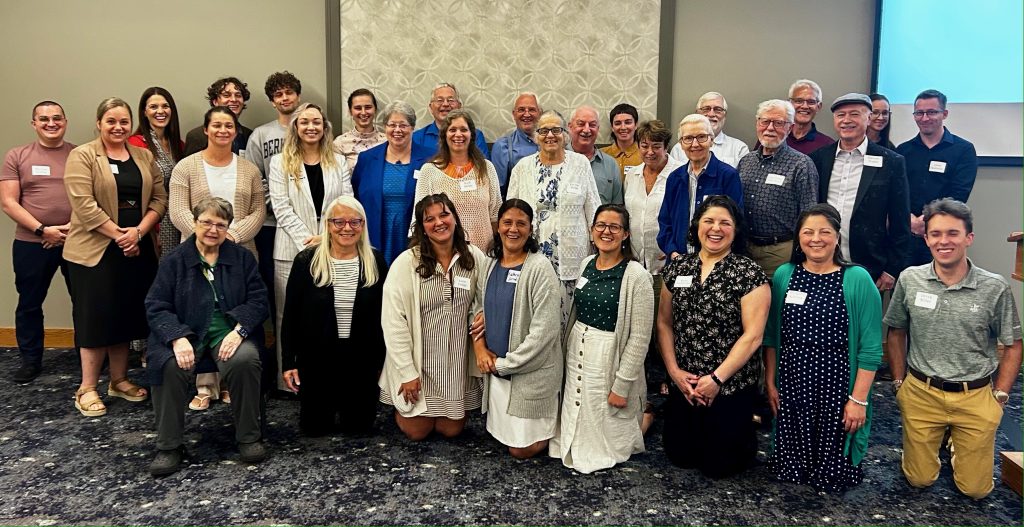
Our Plain Roots conference in Middlebury, Indiana went well last week… so well! The stories that speakers had to tell were equally heartwarming and inspiring. Many of the stories were about overcoming major obstacles on the way to academia, and the deeper the struggle, the greater the triumph. We will be going into detail about each speaker presentation and each panel discussion, one by one. But in the meantime Freeman Miller, Chair of the ADSF Board, shared his reflections and I asked him permission to publish them here.
If you would like to know more about Freeman, you can read a blog post I wrote about him on my personal blog in 2023. If you ever get to talk with Freeman, you will be struck by how unassuming he is. But don’t let that distract you from the fact that he is an accomplished and world-renowned pediatric orthopedic surgeon.
Reflections of the ADSF Conference in Indiana June 26 and 27, 2026
By Freeman Miller, Chair of the ADSF Board
I found the conference reflective of Amish culture and tradition even though no attendee was currently living as part of an Amish community. It reflected the spirit of a barn raising where the whole community gathers to help the family whose barn burned. In this environment all are working in the mode of helping those in need.
People of all ages attended the conference. The general theme was hearing what students need, such as mentoring support and financial support. There was no discussion related to anyone’s individual belief system or political affiliation. This is very much in line with the barn raising concept.
The meeting structure was also very Amish; with no use of honorifics, the sense of humility (Demut) was often evident with a lack of self-promotion or pride (Schtols). I did not get a sense that those present felt they had superseded their friends and relatives who have remained within the Amish culture. There is no sense of needing to rescue people, rather to be available for those needing help.
There was honest sharing of individual life journeys especially around the desire for education, which meant leaving the family and the Amish community. Many mentioned finding their way back over time to a relationship with family and coming to some level of understanding and acceptance of past experiences.
The struggle of succeeding in college had a remarkable consistent theme of feeling anxious and questioning the ability to manage the academic work, navigating an unfamiliar environment, and lack of financial resources. A theme from current students was difficulty navigating technology. Many stories had examples of key mentors who appeared along the journey.
Within the group there was also diversity in chosen fields of study, although the people-helping fields still seem to be the largest group.
The interest and experience in research related to Pennsylvania Dutch linguistic study with its variation and how it is changing was very interesting. Even though most of the attendees with an Amish background learned English as their second language, there was diversity around those who felt comfortable speaking Pennsylvania Dutch at this time. In spite of this difficulty with the language, many speakers could identify cultural elements of their current personality that still identify them as Amish. For many, it is around humility, and for some it still is around residual accents or occasional English errors.
Like Freeman, I also found the discussion of what cultural elements remain in each of us today a fascinating one. I got the sense that there wasn’t anyone there who would have wanted to excise those elements in their personality, even though they can be embarrassing at times when making linguistic or cultural errors.
Perhaps the most significant cultural work I know of to date that explores the question of what makes a person Amish is being conducted by Eythana Miller in her project called Heritage in Translation in which she interviewed people in the unconventional Amish community in Libby, Montana, where she grew up. They slowly modernized, eventually adopted cars, and they wear modern clothing. Though they don’t look “Amish” today, and most don’t claim that label anymore, many still had a hard time defining their associations with Amish identity.
You can read a recent article Eythana wrote for The Dial about her project.
In the next blog post I will write about the opening talk I gave at the conference. The Amish in me did not want to lead with something about myself, so I was glad to start with Freeman’s reflections. I hope to see you here next week!
Author

